Archway Road History
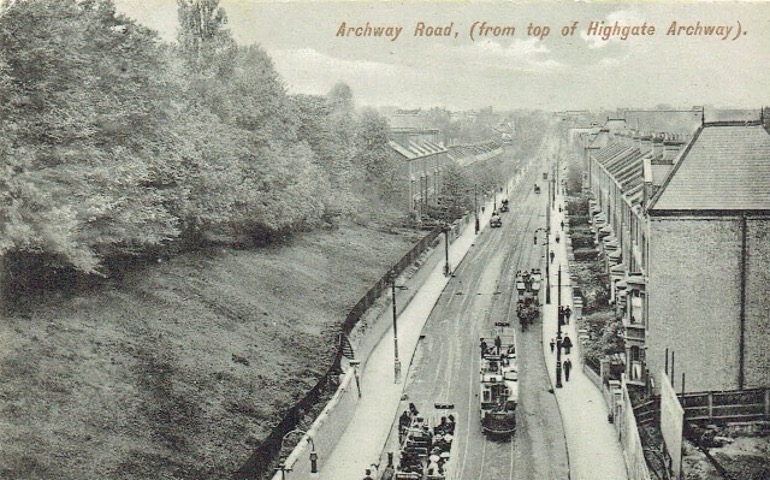
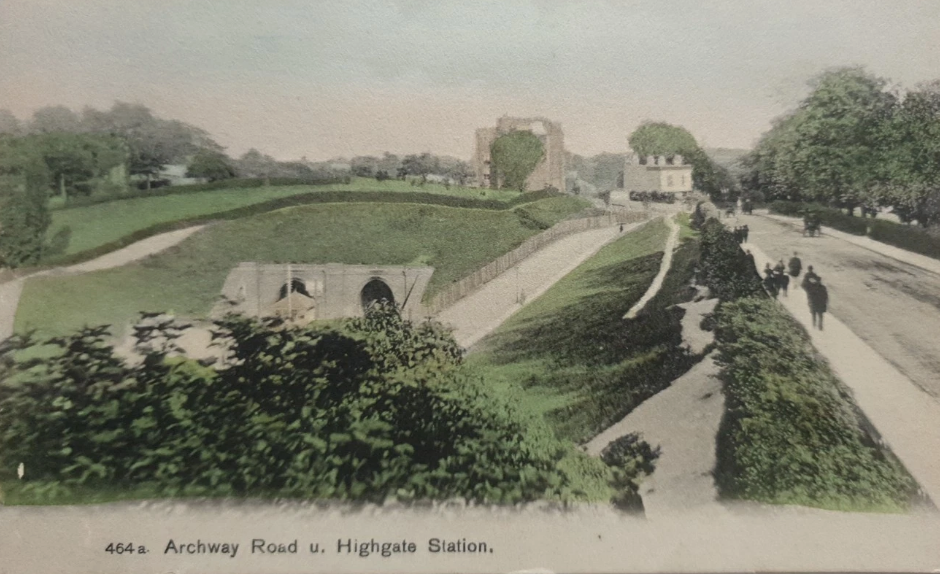
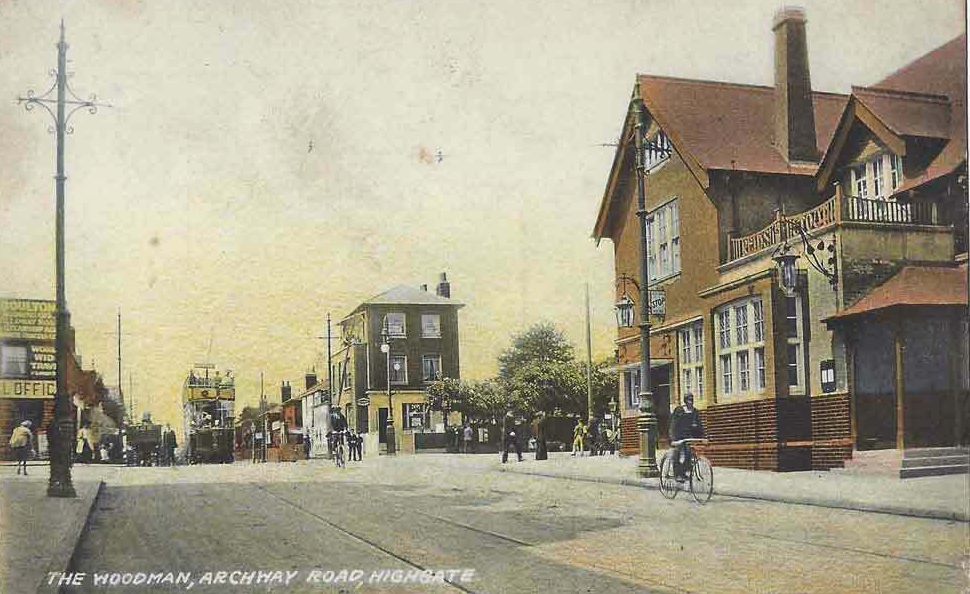
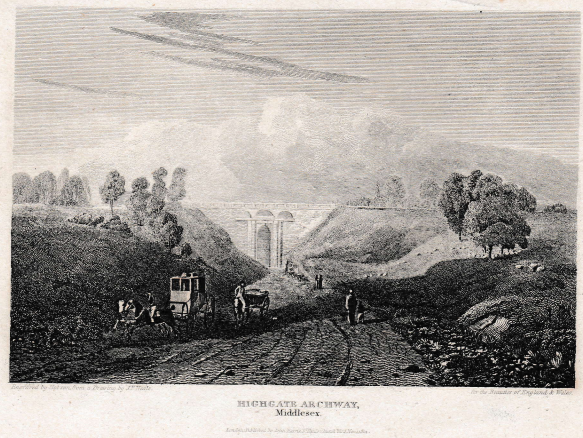
Archway Road, now part of the A1, was opened by the Archway Company in 1812 as a toll road to bypass Highgate Hill, running for 1.5 miles north-west from Holloway Road to join the Great North Road. A tunnel excavated beneath the Hornsey Lane ridge notoriously collapsed and was replaced by a deep cutting and bridge, designed by the eminent Regency architect John Nash. Three new inns catered for travellers: The Archway Tavern to the south, The Woodman at the junction with Muswell Hill Road, and The Wellington at the junction with North Hill.
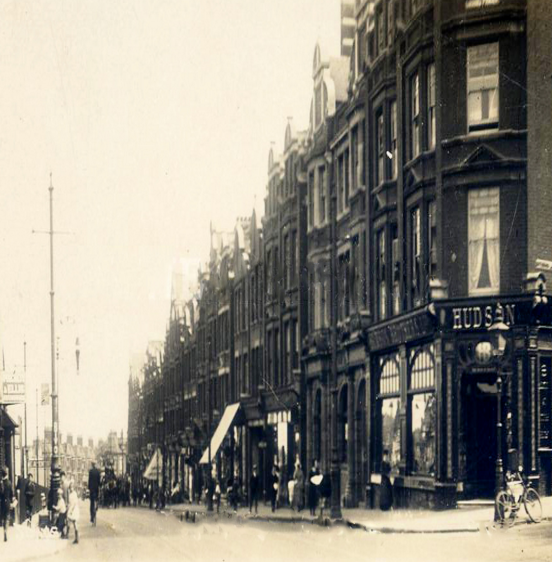
By the late-Victorian period, much of Archway Road was lined with buildings, predominantly shopping parades, reflecting its transformation into a high street servicing the new residential streets behind. The present bridge, built 1897-1900 by the London County Council to the design of Sir Alexander Binnie, provided a broader span to accommodate tramlines. The 120-foot steel arch has a Portland stone balustrade and an ornate cast-iron parapet with dolphin lamp standards.
The 1960s saw major changes to the south-eastern stretch of Archway Road to create a dual carriageway, including the demolition of several buildings, most notably the Whittington College of 1824. Years of blight followed due to proposals to widen the entire road; after sustained local campaigning the scheme was dropped and Archway Road remains one of the most impressive ‘gateways’ into London.